

A good tone of voice makes your brand sound like itself wherever it shows up: on your website, in your newsletter, on social or just in a quick message to a client. It's the way you talk, and it's what makes you recognisable. But what exactly is a tone of voice, and, sooo, how do you nail it?
Tone & voice
Tone of voice comes in two parts that often get lumped together, even though they mean very different things. Your voice is, well, your voice: it springs from your organisation's identity and basically never changes. You are who you are. Your tone is the note you strike within that voice, and that one very much does flex, with the situation, the channel and the person on the other end. In short: one voice, many tones. Think of yourself: you're always the same person, but you talk differently to your gran than to your best mate over a beer.
Why your tone of voice matters
Why pour time into this? Because your tone of voice sets you apart. Products and services are often the spitting image of the competition's, but the way you communicate is uniquely yours. That's exactly where your character lives. And that's what sticks with your audience.
The people behind your brand
There are people behind every brand, and they shine through in the words you choose. A consistent tone of voice shows off your personality and confirms what you stand for as an organisation. It makes your brand human, and people rather like that.
Trust and persuasion
Communicate in the same recognisable way every time and you build trust. Your audience knows what to expect from you, and that makes your message a whole lot more convincing. Lurching about all over the place does the exact opposite: people simply lose the thread.
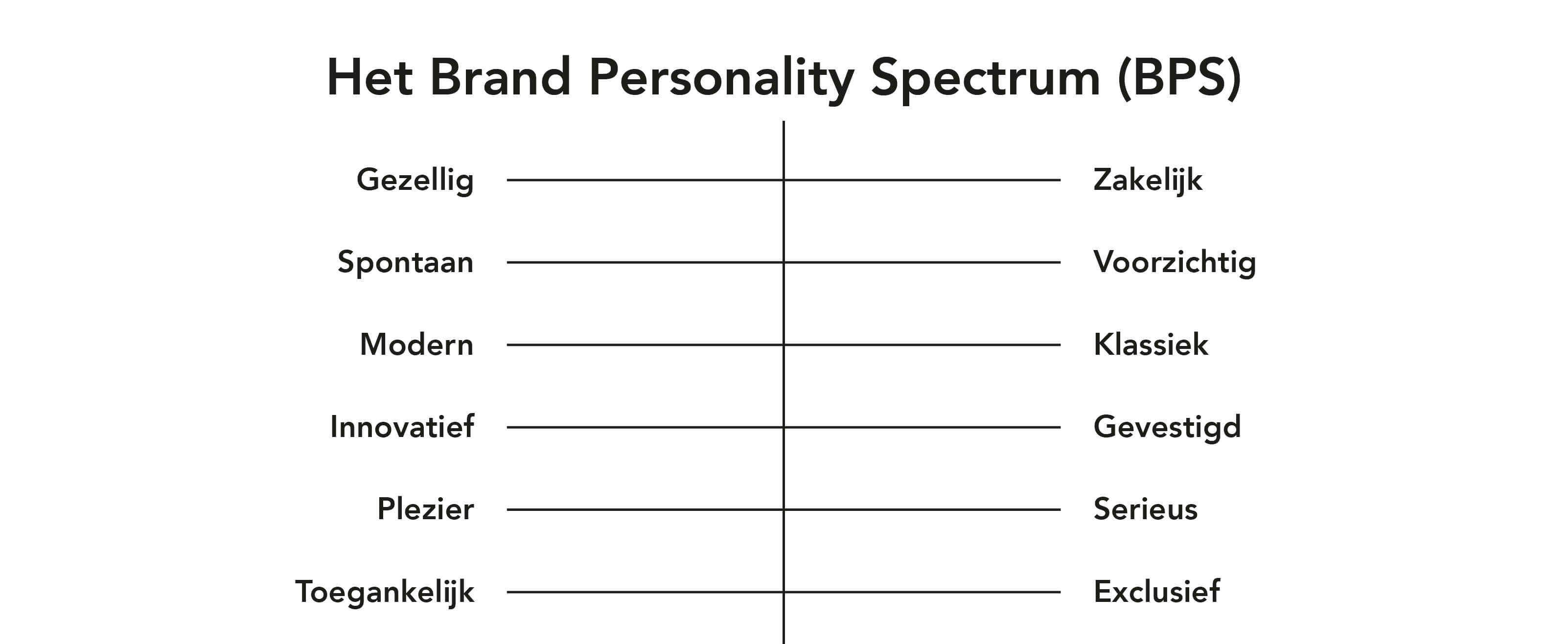
Voice: identity
Your voice starts with your identity: who are you as an organisation and what do you want to project? To get a grip on that, you can reach for a tool like the Brand Personality Spectrum (BPS). It lets you plot your brand along a handful of axes (formal to informal, serious to playful) so you can see clearly what personality your voice has. That personality is the foundation you build everything else on.
Tone: goals
Where your voice stays put, your tone shifts with whatever you're trying to achieve. Do you want to entertain, inform or spur people into action? Each goal calls for a slightly different note. A breezy social post out to make your followers laugh sounds nothing like a crystal-clear how-to or a call to do something right now. So pin down your goal first, then tune your tone to match.
Tone: channels
Every channel has its own vibe and crowd. On social you can loosen up and play, in an email you go a touch more businesslike, and in a formal letter you keep it tidy. It comes down to meeting your audience where they are and matching what feels natural there. So the same message can take on a different tone from one channel to the next, without your voice ever changing.
Tone: audience
In the end, your audience is the heart of the whole thing. Who are you talking to, and what do they expect? A persona helps you make that concrete: give your ideal reader a face, an age and a way of talking. That way the right tone comes naturally and you communicate with purpose, instead of aiming at 'everyone and no one' at once.
Examples from the wild
Bol.com
Bol.com shows how it is done. They read the room, use humour that fits their crowd and jump on current events at exactly the right moment. The result: posts that are both relevant and recognisable, sounding precisely how you would expect Bol.com to sound.

V&D
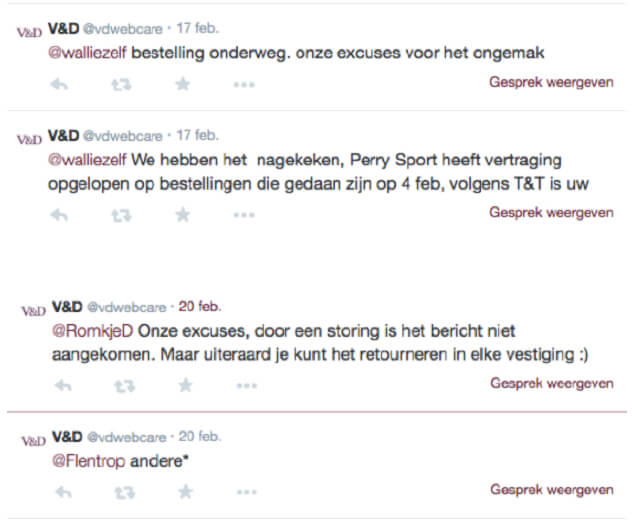
For a lesson in how it goes wrong, look at V&D. Because different people interpreted the tone of voice in their own way, the brand ended up sounding slightly different everywhere. That inconsistency creates noise: your audience never gets a clear picture and the brand loses its recognisability.
Perfect it and hold on to it
The biggest challenge isn't settling on your tone of voice, but keeping hold of it. Especially when several people write on your brand's behalf, inconsistency is lying in wait. The fix: capture your tone of voice in a style guide. Describe your voice, your tone per channel and your audience, with a few examples of how you do and don't do it. That way everyone speaks the same language, even as the team grows.
So what is your tone of voice?
So, got it figured out yet? A strong tone of voice isn't something you whip up in five minutes, but it pays off: you become recognisable, human and convincing. Start with your identity, tune your tone to goal, channel and audience, and write it down so you can keep it up.
Fancy getting stuck into your tone of voice but could do with a hand? Totally fair. KNALGEEL would love to help you find your voice. Over a nice cup of coffee, we'll happily put our heads together with you.
Written by
Laura Nijhuis